How Thick Should a Live Edge Dining Table Be?
How Thick Should a Live Edge Dining Table Be?
Thickness is one of those specifications that most buyers don't think about until someone asks — and then they realize they don't have an answer.
It matters more than it might seem. Thickness affects how the table looks in the room, how stable it is over time, how much it weighs, and what the slab cost before it ever became a table. Getting it right means understanding what the numbers actually mean.
The Range You'll Encounter
Live edge dining tables are typically finished at somewhere between 1.5 inches and 3 inches thick. Within that range, the sweet spot for a full-size dining table is generally 1.75 to 2.25 inches. A finished live edge table could be as thin as 1.5" to 1.75", but the optimal thickness is 2" or more, especially for wider pieces requiring greater strength and stability. GL Veneer
Below 1.5 inches, a dining table starts to look and feel thin — structurally adequate in some configurations, but lacking the visual weight that makes a live edge piece feel like the object it's meant to be. Above 2.5 inches, you're in statement territory: a slab that commands the room, carries significant weight, and comes at a meaningfully higher material cost.
For most dining rooms and most buyers, 1.75 to 2.25 inches is the range that balances presence, stability, and practical weight.
Why Thickness Affects Stability
This is the less obvious part of the thickness question, and it's worth understanding.
Wood moves with humidity. It expands slightly in humid conditions and contracts in dry ones — this is normal behavior for any solid wood piece, including a properly dried one. The question is how much it moves, and how quickly.
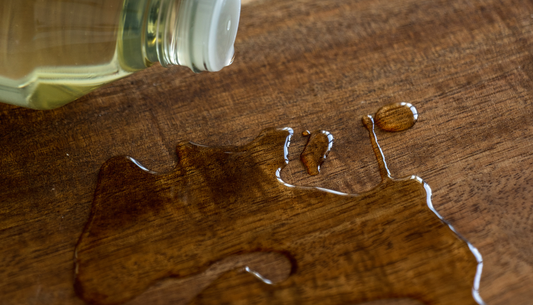
A thicker slab requires a lot more moisture to move through the finish in order to change the moisture content of the wood and cause movement. Thewoodcycle In practical terms: a 2-inch slab is more dimensionally stable in response to seasonal humidity changes than a 1.25-inch slab of the same species, because there's simply more wood for moisture to penetrate before the core of the slab is affected.
This is one reason why thickness and drying time work together. A thicker slab that hasn't been properly dried is not more stable — it's less stable, because the moisture differential between the surface and the core is larger. On average, it takes around 12 months per inch of thickness to air dry wood to a level considered usable for an interior table. brickyard bespoke A 2.5-inch slab, fully air-dried, represents years of waiting before it's ready to be worked.
At Monowoodstudio, our slabs air-dry for six to eight years after initial kiln processing. That drying time is part of why the thickness numbers we work with translate to actual long-term stability — not just the appearance of it. If you want to understand why drying time matters more than almost any other factor, that's covered here.
Thickness and Visual Weight
Beyond the technical argument, thickness is an aesthetic decision.
A 1.75-inch slab reads as refined and considered — present in the room without dominating it. This works well in spaces where the table is one element among several, or where a lighter visual register is the goal.
A 2.25-inch slab reads as more substantial — the table announces itself. The edge profile becomes a design element in its own right. This works well when the table is meant to be the focal point, or in larger open-plan spaces where a thinner piece might feel underwhelming.
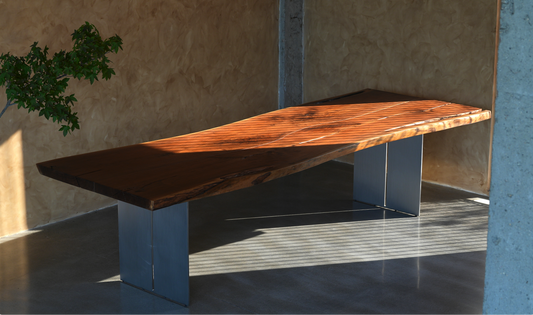
A 3-inch or thicker slab is a statement. It belongs in a room that can hold it — generous ceiling height, significant floor area, a design scheme that can absorb the visual weight. In the right context, it's extraordinary. In a mid-size dining room, it can feel like too much.
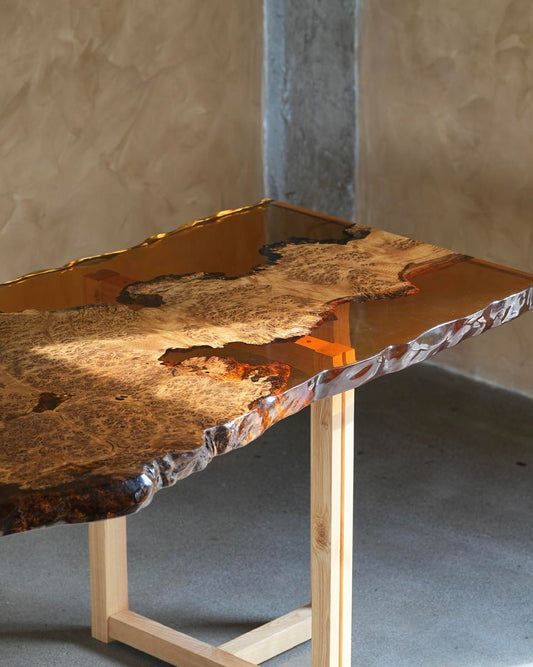
The slab edge is where thickness is most visible. When you're seated at the table, you see the profile of the edge at eye level. A 2-inch edge with a slight chamfer or natural live taper reads very differently than a 1.25-inch edge — this is often what people are responding to when they say a table "looks substantial" or "feels right."
Thickness and Weight: The Practical Consideration
A thicker slab is heavier — proportionally so. If you double the thickness, the weight also doubles. Walnut is approximately 3.3 lbs per board foot; white oak is approximately 3.6 lbs per board foot. Moruxo
For a 84-inch by 36-inch dining table in black walnut: a 1.75-inch slab weighs roughly 120–130 lbs. The same table at 2.5 inches weighs roughly 175–190 lbs. At 3 inches, you're approaching 220 lbs for the top alone.
This matters for two reasons. First, installation: a table above 150 lbs requires two people and some planning to move into place. Second, delivery: heavier tables require freight handling rather than standard parcel delivery. Our DDP service covers both — customs, ocean freight, and last-mile delivery to your door — but it's worth knowing what you're specifying before you finalize dimensions.
What We Recommend for Different Use Cases
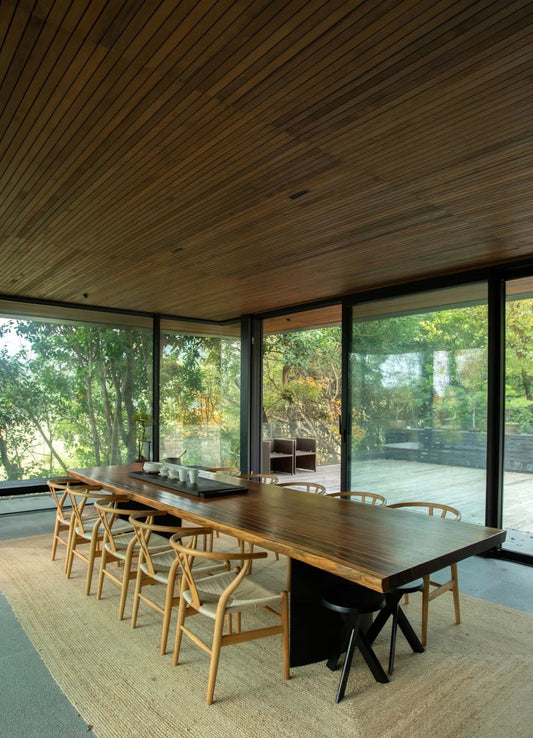
Standard dining table (6–10 people): 1.75"–2.25" finished. Sufficient stability, appropriate visual weight, manageable for delivery and installation.
Large dining table (10+ people, or over 100 inches): 2"–2.5" finished. The longer the span, the more thickness contributes to rigidity across the full length.
Conference table: 2"–2.5" finished. A conference table lives in a professional environment where the table needs to project presence and authority. Thinner reads as residential; thicker reads as intentional.
Coffee table or bench: 1.5"–1.75" finished. Lower visual weight is appropriate for pieces that sit lower in the room.
The Question to Ask Your Maker
When you're specifying thickness with any live edge table maker — us or anyone else — the question worth asking is: what is the finished thickness, and what was the raw slab thickness before flattening?
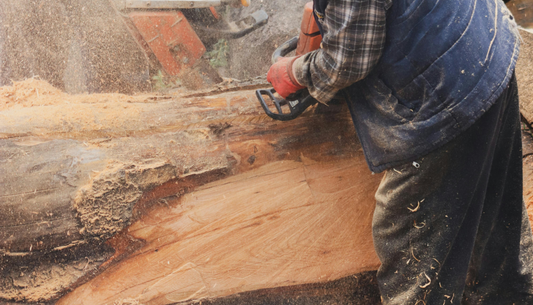
Flattening and finishing removes material. A slab advertised as "3 inches" before processing will finish at 2 to 2.5 inches after the router sled, planer, and hand sanding have done their work. A maker who quotes finished thickness and raw thickness separately is telling you something about their process. One who quotes only one number is worth asking further.
We quote finished dimensions. When we tell you a slab is 2.1 inches thick, that's what arrives at your door.
Have a specific table in mind? See what's currently available or tell us what you're working with — we'll match the thickness recommendation to your room and use case.