How Much Does an Epoxy River Table Cost? A Transparent 2026 Breakdown
If you've started shopping for an epoxy river table, you've probably noticed the prices are all over the map — from a couple thousand dollars to well past fifty thousand. That spread isn't random, and it isn't (usually) about one maker gouging and another being generous. It reflects genuinely different amounts of material, labor, and risk baked into the piece.
This guide breaks down what actually drives the cost of an epoxy river table in 2026, what real ranges look like by size, and — most importantly — how to tell whether a given quote is a fair deal or a future problem. No hard sell, just the numbers and the reasoning behind them.
The short answer
Custom epoxy river tables generally range from around $5,000 for a small accent piece to $50,000 or more for a large, statement dining or conference table, with most mid-size custom dining tables landing somewhere in the $15,000–$30,000 band. As a rule of thumb, an epoxy river table costs roughly 20–40% more than a comparable solid-wood live edge table of the same size, because the resin river adds material and a great deal of labor.
Those are industry-wide ranges drawn from multiple custom makers, not MonoWood price quotes — every custom piece is priced to its own spec. But they're a realistic frame for what you should expect to budget.
Why epoxy river tables cost more than solid wood
The "river" looks simple. It isn't. Compared with a solid-wood live edge table, a river table demands significantly more of almost every input.
Far more resin. A deep-pour river can require six to ten times the epoxy of a piece that just has a thin protective coat. Deep-pour resin isn't cheap on its own — it runs on the order of $80 a gallon before any labor — and a large river swallows gallons.
Far more labor. The resin has to be mixed and poured in careful stages to manage heat, then cured, then leveled. A river table typically has to be flattened twice and involves many times the sanding and finishing hours of a wood-only table. It's common for a large river table to carry 60–80+ hours of skilled labor.
More risk. A deep pour can go wrong — bubbles, uneven cure, cracking from heat. Experienced makers price in that risk because they occasionally eat a failed pour. That expertise is part of what you're paying for.
Add it up and the resin river, which looks like the "extra," is often the most labor-intensive part of the whole build.
The cost breakdown: where your money goes
For a representative large custom river table, here's roughly how the budget splits. Exact figures vary by maker and spec, but the proportions are instructive:
- The wood slab — often the single biggest line item. A premium, wide, well-dried hardwood slab can account for a large share of the total. Rare species and unusual widths cost more, and properly dried slabs cost more than green ones (as they should).
- The resin river — material plus the specialized labor to pour and finish it.
- The base — custom steel (typically powder-coated), acrylic, or solid wood. A precision steel base is a meaningful cost on its own.
- Labor and finishing — flattening, sanding, sealing, curing. This is where the hours pile up.
- Delivery — crating, freight, insurance, and (for cross-border orders) customs and duties.
The takeaway: on a well-made table, most of the cost is material and skilled hours, not markup. When a quote comes in dramatically below everyone else's, something in that list got cut — and it's usually the drying or the base.
What drives the price up or down
Several variables move the number in either direction:
Size and slab width. Longer and wider means more wood, more resin, and a base engineered for a heavier span. A 10-foot conference table is not a linear step up from a 6-foot dining table — it's a bigger jump.
Species and rarity. Figured grain, unusual color, and exceptional width command premiums. At MonoWood we work in Black Walnut, White Oak, and Ash — species chosen for decades-long stability, not novelty.
River style. A clear river that showcases the wood edges reads differently from a heavily tinted, opaque river, and the depth of pour affects how much resin is needed.
Base complexity. A simple flat-bar steel base costs less than a sculptural or cantilevered one.
Finish and detailing. Hand-rubbed finishes, inlays, and edge treatments add hours.
Delivery terms. This one is easy to overlook and expensive to get wrong — more below.
The hidden cost most quotes leave out: delivery and customs
Here's where a "cheaper" table can quietly become the more expensive one. A large, heavy, fragile slab has to be crated, freighted, and insured. And if it crosses a border — say, a US maker shipping to Canada, or vice versa — there are duties, customs brokerage, and freight charges that often aren't in the sticker price.
Buyers regularly get a quote, feel good about it, and then get hit with a customs and freight bill at the border that adds thousands. It's one of the most common unpleasant surprises in this category.
This is exactly why MonoWood ships DDP (Delivered Duty Paid) to both the US and Canada. Duties, customs, and insured freight are included and the piece arrives crated and insured — the price you agree to is the price you pay, with no border surprises. If you're buying across the border specifically, we walk through how this works in buying a live edge table in Canada.
Why the cheapest quote is rarely the best value
It's tempting to sort by price and pick the low number. With river tables, that's a genuine gamble, because the two things most often cut to hit a low price are the two things that determine whether the table survives:
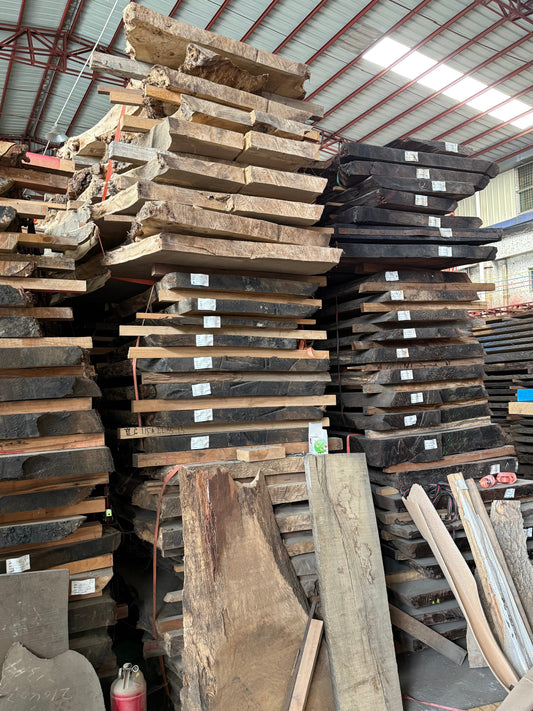
- Drying. A slab that wasn't dried properly will keep moving after you own it — cupping, cracking, or splitting the resin seam. Proper drying is slow and expensive, so it's the first corner cut on a cheap table. At MonoWood, slabs are kiln-dried to 8% moisture and then air-dried 5–8 years in-house before cutting, which is why they stay flat. (More on that in do live edge tables crack or warp?)
- The base and engineering. An underbuilt base under a heavy top leads to sag and stress over time.
A river table is a decades-long purchase. Paying 20% less for a piece that fails in year three isn't a saving. The right question isn't "who's cheapest?" — it's "what am I actually getting for this price, and will it last?"
What you're paying for with a MonoWood river table
To make the value concrete, here's what's included in a MonoWood commission beyond the table itself:
- Species chosen for stability — Black Walnut, White Oak, or Ash, kiln-dried to 8% and air-dried 5–8 years before cutting.
- You approve the actual slab — during slab selection you see photos of the specific piece before fabrication begins, so there are no surprises.
- A base engineered for the span — custom steel, acrylic, or solid wood.
- DDP delivery — duties, customs, and insured freight included; crated and insured.
- A permanent record — every table carries a brass plaque linked to an archive page documenting that exact slab's species, moisture, and origin.
- Trade pricing for designers and architects through our trade program.
Budgeting your table: a simple approach
Rather than anchoring on the lowest number you can find, work the other direction:
- Decide the size you actually need (seating count drives length).
- Choose solid wood vs. river — if you love the river look, expect roughly 20–40% over a solid-wood equivalent. (Undecided? See live edge vs. epoxy river table.)
- Confirm the quote includes drying, base engineering, and delivery/customs — if it doesn't, add those in mentally before comparing.
- Weigh the lifespan. A properly built river table is a once-in-a-generation purchase.
Once you frame it that way, the fair quotes and the too-good-to-be-true ones separate out quickly.
Ready to price your piece?
Every river table is priced to its own spec, so the most useful next step is a short conversation about your space, size, and species. Browse the collection or recent portfolio projects to get a feel for what's possible, then reach out for a quote with delivery and customs already included — no border surprises, no hidden line items.
New to live edge entirely? Start with our hub, What Is a Live Edge Table?