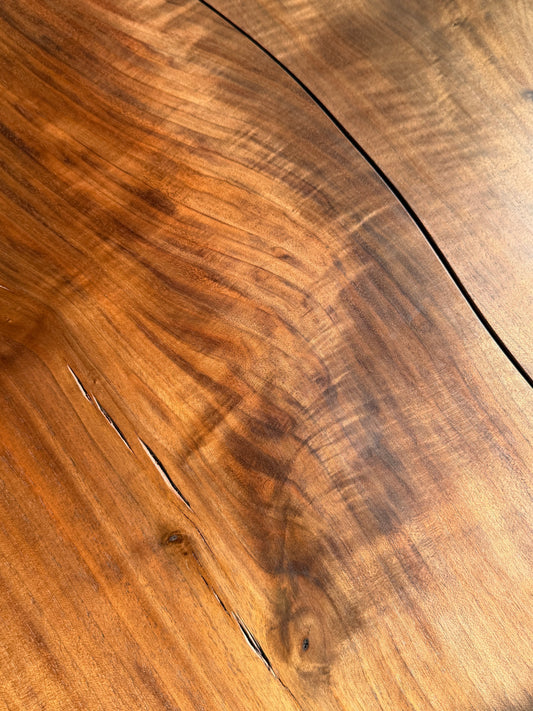
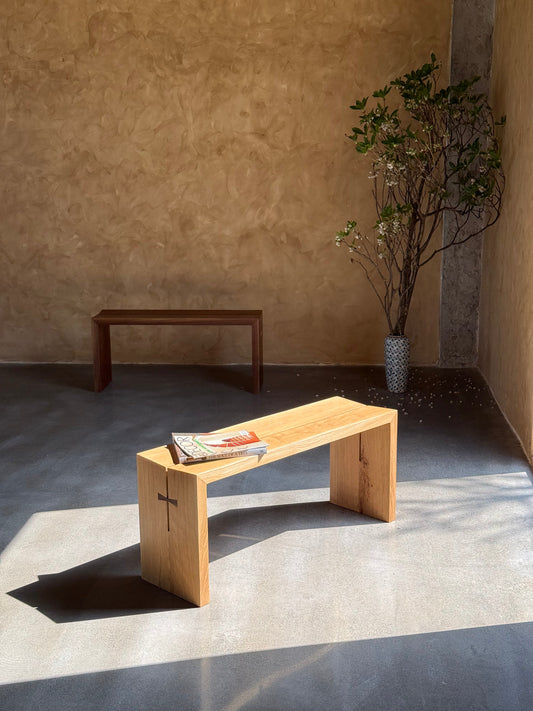
Why do we let our wood rest for 8 years before building your table?
At MonoWood Studio, we believe that the best work takes time. We focus on making solid wood slab dining tables that last, not just look good for a short time.
Wood never really stops reacting to its environment. If a shop rushes the build, you might see problems like twists or cracks later. These are common in mass-produced furniture.

We don't take shortcuts. For our custom solid wood tables, we let the wood rest for six to eight years. This lets it relax and release tension before we build it.
Ever moved lumber into a hot garage? You've seen how important acclimation is. This article will explain why wood moves and how to manage it. We follow methods recommended by the US Forest Service.
By being patient, we make furniture that lasts for generations. It's not just about the look; it's about the quality and durability.
Key Takeaways
- MonoWood Studio craftsmanship centers on time-tested process, not speed.
- Wood keeps changing with humidity, even in a finished solid wood slab dining table.
- Mass-produced furniture often relies on veneer shortcuts that can hide weak structure.
- No shortcuts means resting slabs for six to eight years after drying steps.
- Real-world acclimation issues show up fast in places like central Texas garages.
- Custom solid wood tables can be built to last when wood movement is planned and managed.
What “wood resting” actually means at MonoWood Studio
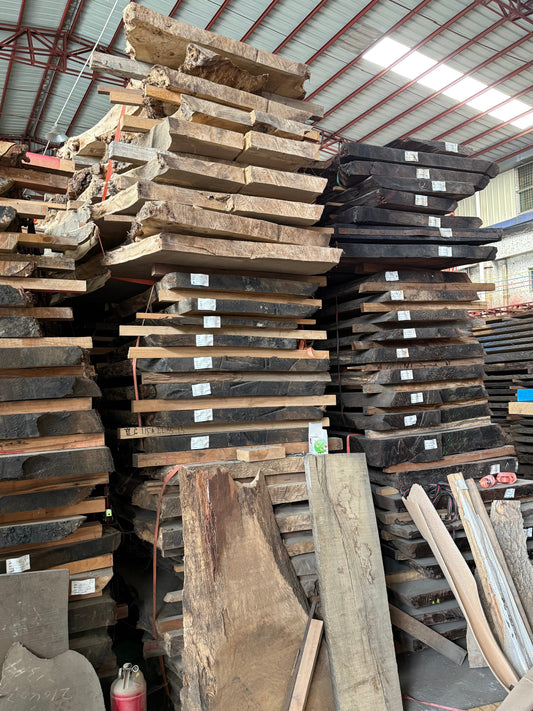
At MonoWood Studio, “wood resting” means giving wood time, space, and patience. Slabs stay on site for six to eight years. This lets the wood settle in a calm, consistent environment.
This long time isn't just for show. It supports a natural air-drying process. This process helps the slab keep its natural form without being rushed.
Wood resting isn't just a fancy term for leaving wood in a shop for a few days. It's not just "letting it sit" after a quick delivery from a nearby warehouse, even if the climate seems close. The goal is undisturbed resting, so the material can relax and stop surprising you later.

Many woodworkers talk about stages, and they're easy to spot in real shop behavior. Jonathan Katz-Moses often recommends a couple days for air-dried lumber and a couple weeks for kiln-dried lumber to acclimate before milling. That's helpful, but it's different from long-term holding.
Then comes the moment when milling exposes internal tension. After a big cut, boards that looked flat can twist by the next day. A rip cut can even pinch a saw blade as stress shifts. That's why releasing tension is treated as a practical step, not a theory.
- Acclimate, then mill: let lumber adjust before the first passes.
- Mill, then wait: give it time to move before final sizing.
- Rest after major milling: Mark Spagnuolo (The Wood Whisperer) often discusses letting stock rest about a week before final passes.
MonoWood Studio builds this logic into their schedule, on a much larger scale. With extended undisturbed resting, the slab has more chances to ease internal tension gradually. This protects the structural integrity when it becomes a table.
Solid wood slab dining table, Sustainable heirloom furniture, Natural air-drying
A solid wood slab dining table feels alive because it is. It's made through natural air-drying. This process helps the wood become stable for real homes and seasons.

Wood is hygroscopic, so it keeps responding to humidity
Wood is hygroscopic. It absorbs moisture like a sponge and releases it when the air dries. This change happens as humidity and temperature change, as Jonathan Katz-Moses points out.
For tabletops, the biggest change is across the grain, not along it. So, a black walnut live edge table can widen or narrow with the seasons. But its length hardly changes. This is normal in high-quality handcrafted wood furniture.
Equilibrium moisture content and why “acclimation” isn’t just a buzzword
Equilibrium moisture content (EMC) is when wood and air are balanced. This prevents the wood from quickly absorbing or losing water. EMC varies by location and month, helping predict what a slab might need in your home.
In Santa Barbara, EMC changes from 12.1% in November to 15.3% in July, a 3.2% difference. Katz-Moses compared this to a moisture meter and found only a 0.1% difference. This makes the numbers feel real, not just theory.
Indoors, moisture changes are usually smaller than outdoors. But they're present across U.S. climates. So, a white oak dining table needs time to acclimate in a shop before settling in your home, even with changes in HVAC use by season.
Planning for seasonal expansion protects generational furniture quality
Seasonal expansion is predictable and measurable, not random. Builders use a simple framework based on Forest Products Laboratory data to estimate movement before choosing hardware and joinery.
- Formula: (board width) × (radial/tangential coefficient) × (change in moisture)
- Plain (flat) sawn uses tangential coefficients; rift/quarter sawn uses radial coefficients
- Plain sawn end grain lines look more horizontal; rift/quarter sawn lines look more vertical
For example, a 40-inch-wide quarter-sawn walnut top can move about 0.243 inches with a 3.2% moisture change. This movement is allowed in sustainable heirloom furniture, keeping it quality for generations without stressing the wood.
This planning ensures a solid wood slab dining table stays flat, doors close, and finishes remain smooth. It's why handcrafted wood furniture is designed to breathe, not fight the weather.
Releasing internal tension to prevent wood instability, warping and cracking
Even dried lumber can have hidden stress from how it grew and was cut. This stress can cause wood to warp and crack, even when it seems ready. The goal is to let the wood relax, so it stays stable and strong.
Custom live edge slabs are extra sensitive. Their grain changes quickly, and their edges follow the tree's natural shape. This makes it important to let them settle before they move too much.
Why boards “move” after you cut or mill them
Milling can reveal stress that was hidden. Jonathan Katz-Moses says a board can look flat but then bend the next day. This is stress showing up after the wood is cut.
- After ripping a board, the kerf can pinch the blade and even stall the saw as the fibers close in.
- Cutting stock to length before jointing and planing can trigger twist or bow within minutes to hours.
- For parts like sliding doors, solid wood (not plywood) can raise the risk of warp if movement isn’t planned.
Undisturbed resting time helps the slab reach a more stable “preferred state”
Once lumber is freed from tight bundles and stickers, it can settle into a “preferred state,” like a gentle cup or bow, after a few days. This shift is normal, and it’s why resting matters. It gives the slab room to express stress before it becomes a finished top.
Mark Spagnuolo describes a practical workflow many shops use: do most of the milling, wait about a week, then re-joint and plane after movement occurs. This pause supports structural integrity because final cuts happen after the wood has had a chance to react.
How long is “enough” time depends on the goal
There isn’t one perfect timer for releasing tension. The right window depends on what you need from the piece and how much tolerance you want to build in against warping and cracking.
- New shop environment: days to weeks to reduce wood instability as humidity levels even out.
- After milling: overnight to about a week to let fresh stress show up before final sizing.
- Heirloom-level builds: multi-year resting for custom live edge slabs when the target is long-term structural integrity.
Rules like “a year per inch” get quoted a lot, but they often don’t fit real furniture timelines. A smarter path blends controlled drying with strategic waiting, so the wood can move on the bench instead of moving in your dining room.
Kiln-dried to precision, 8% moisture content, then time: the MonoWood Studio process
At MonoWood Studio, drying isn’t rushed, and it isn’t guesswork. Each slab is kiln-dried to precision to reach kiln-dried 8% moisture content. This creates a furniture-ready baseline that’s consistent and measurable.
- The slab starts with kiln-dried to precision control, so moisture is brought down evenly through the thickness.
- Next, it’s moved into the monowood studio process for years of undisturbed resting, typically six to eight years.
- During that time, the wood focuses on releasing tension so future milling and joinery behave in a calmer, more predictable way.
This is where the natural air-drying process mindset matters, even after the kiln work is done. Kiln targets help, but movement can show up after cuts and surfacing. This idea is echoed by educators like Jonathan Katz-Moses and Mark Spagnuolo.
For wide dining tops, time is a practical tool. Long undisturbed resting lowers the odds of wood instability, warping, and cracking. This is important for tables that face real seasons, heat, and air conditioning in a U.S. home.
The slower timeline is what separates custom solid wood tables from mass production. Instead of forcing a slab into assembly on a deadline, MonoWood Studio builds around what wood does naturally. It settles, it shifts, and it keeps releasing tension until it holds its shape with more confidence.
Heirloom-quality details: one tree one table, 100% solid wood, food-grade finish
MonoWood Studio follows a simple rule: 100% solid wood, every time. They avoid veneers and engineered cores. This means their tables are built to last, with a real feel in the weight and grain.
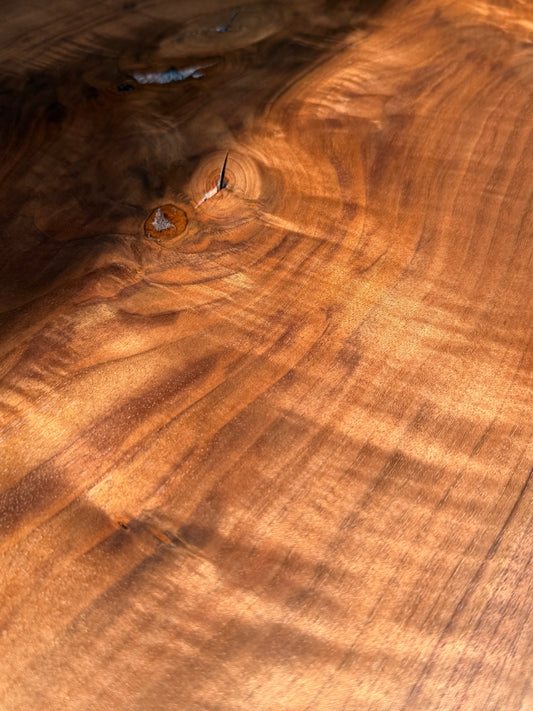
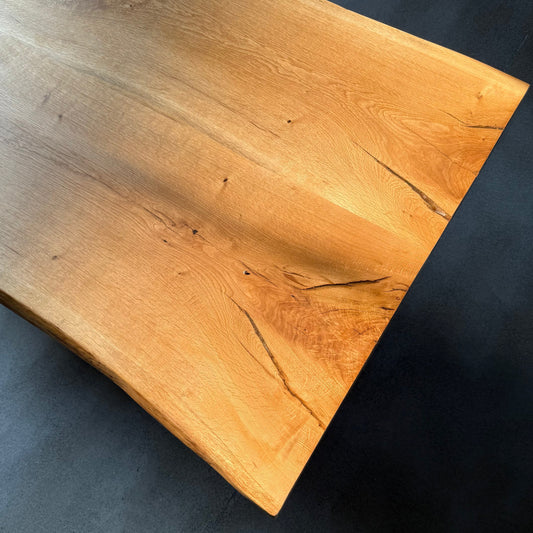
Their one tree one table approach keeps the story clear. A black walnut live edge table feels unified, not patched together. The same goes for a white oak dining table, where color and grain stay consistent.
The finish is as important as the wood for daily use. Each surface is treated with german osmo polyx-oil, a food-grade finish. It's made for tables where kids eat and hands rest, without a plastic look.