What Is a Live Edge Table? A Complete Buyer's Guide

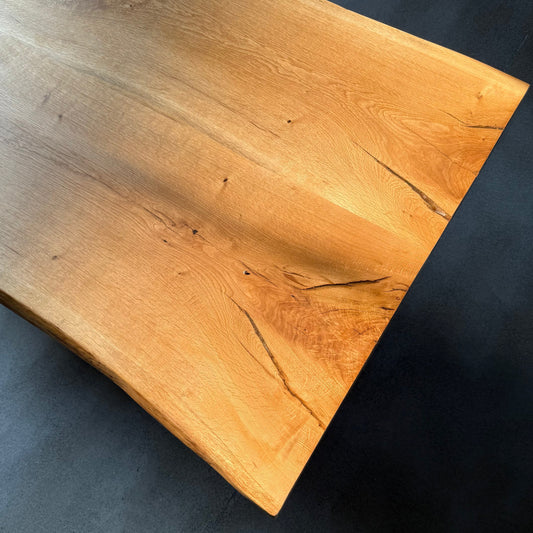
A live edge table is a table whose top keeps the natural, uncut edge of the tree instead of being trimmed into a straight line. Where a conventional table has four squared-off sides, a live edge piece preserves the original contour of the trunk — the gentle waves, the bark line, the way the wood actually grew. The result is a surface where no two tables are ever quite the same, because no two trees are.
If you've landed here trying to decide whether a live edge table is right for your home, restaurant, or office, this guide covers everything: what "live edge" actually means, how these tables are made, what separates a piece that lasts decades from one that cracks in a season, and the practical questions worth asking before you buy.
What "live edge" actually means
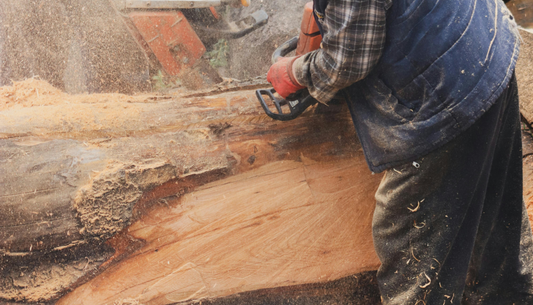
The term "live edge" refers to the outermost edge of a wood slab — the part that was just beneath the bark when the tree was alive. Traditional furniture-making removes this edge entirely, squaring the board so it can be joined with others. A live edge design does the opposite: it treats that natural edge as the whole point.
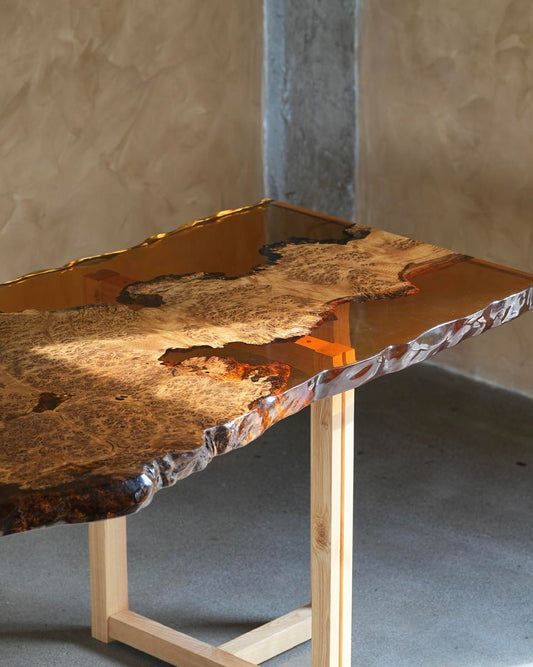
Most live edge tables are cut from a single slab, meaning one continuous piece of wood taken from a horizontal cut through the trunk. A single-slab top shows one uninterrupted grain pattern from end to end. Larger tables may be "bookmatched," where two slabs cut from the same log are opened like the pages of a book so the grain mirrors down the center.

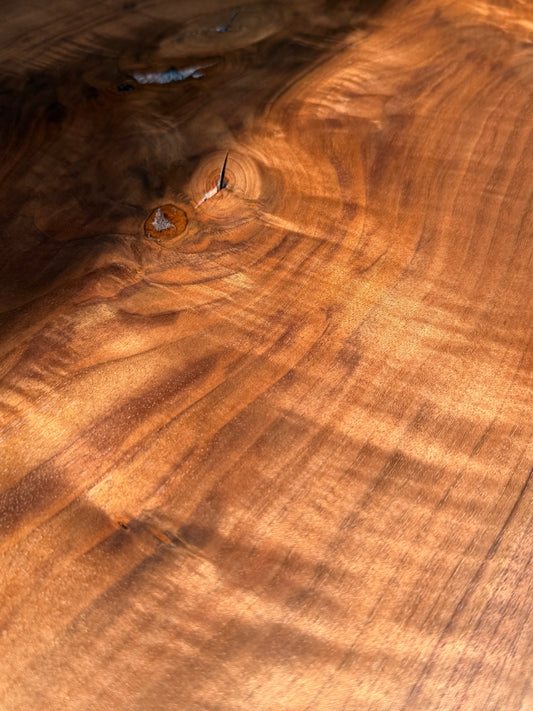
Because the shape follows the tree rather than a template, a live edge table carries a kind of built-in provenance. The knots, the color shifts, the subtle curve of the edge — these are a record of how that specific tree lived.
Live edge vs. epoxy river tables
People often use "live edge" and "epoxy river table" interchangeably, but they're not the same thing.
A live edge table is defined by the natural edge of the wood. It can be a solid single slab with nothing added.
An epoxy river table is a live edge piece where two slabs are set apart and the gap between them is filled with clear or tinted resin, creating a "river" that runs down the middle. So an epoxy river table is a type of live edge table — but not every live edge table has epoxy.

Which one is right for you comes down to whether you want the pure, quiet character of solid wood or the dramatic contrast of a resin river. (We compare the two in depth in our guide to live edge vs. epoxy river tables.)
How a quality live edge table is made
This is where the biggest differences in price and longevity live. Two tables can look nearly identical in a photo and behave completely differently over ten years, and it almost always comes down to how the wood was prepared before anyone shaped it.
It starts with the tree species
Not every hardwood is a good candidate for a large, stable slab. The species used for serious live edge work are chosen for how well they hold their shape over decades, not just for looks. At MonoWood Studio we work in three: Black Walnut, White Oak, and Ash — species selected specifically for long-term dimensional stability. (If you're weighing species, our companion guide covers the best wood for a live edge table in detail.)
Drying is the part nobody sees — and it matters most
Freshly cut wood is full of moisture. If you build a table before that moisture leaves, the wood keeps drying inside your home and moves as it does — which is how tables crack, cup, and warp. Proper drying is the single most important step in whether a table survives.
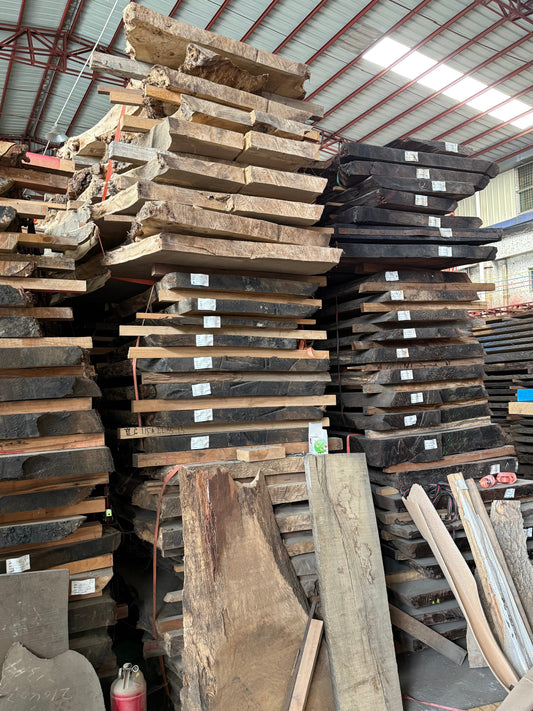
A quality maker kiln-dries slabs down to roughly 8% moisture content, which is the range that matches a climate-controlled interior. The most careful makers go further: at MonoWood we kiln-dry to 8%, then air-dry each slab 5 to 8 years in-house before it's ever cut. That long, slow acclimation lets the wood settle and release internal stress before it becomes a table — which is precisely why properly dried slabs stay flat.
For the full explanation of why drying prevents movement, see do live edge tables crack or warp?
The base holds it all together
A live edge top can sit on several kinds of base, and the choice is both structural and aesthetic. Common options include custom steel (often powder-coated), cast acrylic for a floating, near-invisible look, or a matching solid-wood base. The right base depends on the span of the top, the weight of the slab, and the look you're after.


What live edge tables are used for
Live edge tables show up across a wide range of settings because a single striking slab works as both furniture and centerpiece:
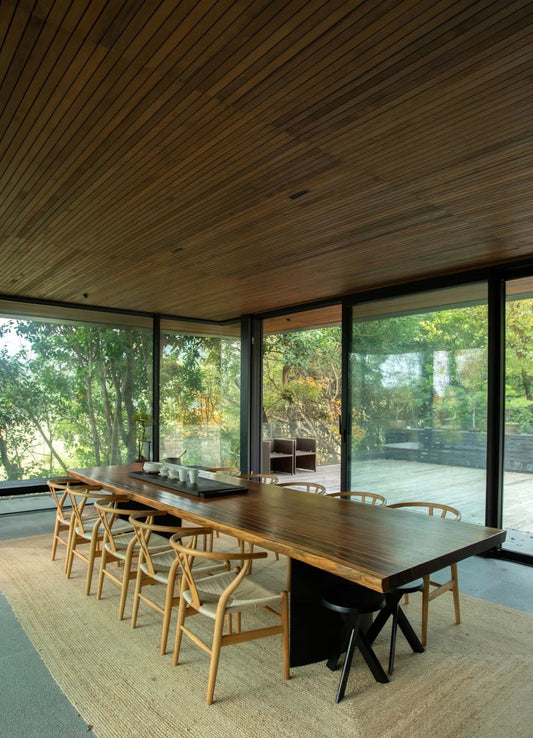
- Dining tables — the most common use, seating anywhere from four to fourteen depending on length.
- Conference and boardroom tables — a growing category for offices and hospitality spaces that want a signature piece rather than a laminate rectangle. (See our live edge conference table guide for specifiers.)
- Restaurant and hospitality tables — communal tables, host stands, and bar tops.
- Desks, consoles, and coffee tables — smaller pieces that bring the same natural character into tighter spaces.
What does a live edge table cost?
Live edge tables span a very wide price range because "live edge" covers everything from a small production coffee table to a fourteen-foot bespoke boardroom piece. As a rough orientation, larger custom solid-wood dining tables typically run into the low-to-mid five figures, and adding an epoxy river usually pushes cost 20–40% higher than a comparable solid-wood table, since river tables use far more material and labor.
Price is driven by slab size and rarity, the species, base complexity, finish, and — critically — how the wood was dried and who's standing behind it. A cheap slab that skipped proper drying isn't a bargain if it fails. For a transparent breakdown, see our guide to epoxy river table cost.
How to buy a live edge table that lasts
If you take one thing from this guide, make it this: ask about the wood before you fall in love with the shape. A beautiful edge means nothing if the slab wasn't dried properly.
A short checklist worth running through:
- How was the wood dried, and to what moisture content? You want to hear kiln-dried to around 8%, ideally with additional air-drying time.
- What species is it, and why? A good maker chooses species for stability, not just color.
- Can I see the actual slab before it's built? Reputable custom makers show you photos of the specific slab, not a stock image. At MonoWood, slab selection means seeing photos of your actual piece before fabrication.
- What's the base, and is it engineered for this span?
- How does it ship, and who covers customs and freight? For cross-border orders this matters enormously — MonoWood delivers DDP (duties, customs, and insured freight included) to the US and Canada, so the price you agree to is the price you pay.
- Is there a record of the piece? Every MonoWood table carries a brass plaque linked to a permanent archive page documenting that exact slab — species, moisture, and origin.
Is a live edge table right for you?
If you want a table that's genuinely one of a kind, that reads as both furniture and art, and that — built correctly — will outlast the room it sits in, a live edge table is hard to beat. The key word is built correctly. The character comes from the tree; the longevity comes from the maker.
If you're ready to see what's possible, browse our collection or look through completed projects in the portfolio. Designers and architects specifying for clients can find dedicated support through our trade program. And when you want to talk through a specific space, get in touch — every MonoWood piece starts with a conversation, not a checkout button.